
The Pilkhan Tree: Ficus virens – The Gentle Giant
The Pilkhan tree, scientifically known as Ficus virens, is a magnificent and ecologically vital tree native to the Indian subcontinent, Southeast Asia, and Australia. It is a member of the vast and important Moraceae family, which includes all figs. Often overshadowed by its famous relatives like the Peepal (Ficus religiosa) and Banyan (Ficus benghalensis), the Pilkhan is a keystone species in its own right, playing a crucial role in the ecosystem.
1. Botanical Description & Identification
- Common Names: Pilkhan, White Fig, Spotted Fig, Pilkhan Banyan.
- Scientific Name: Ficus virens
- Family: Moraceae (Fig family)
Key Identifying Features:
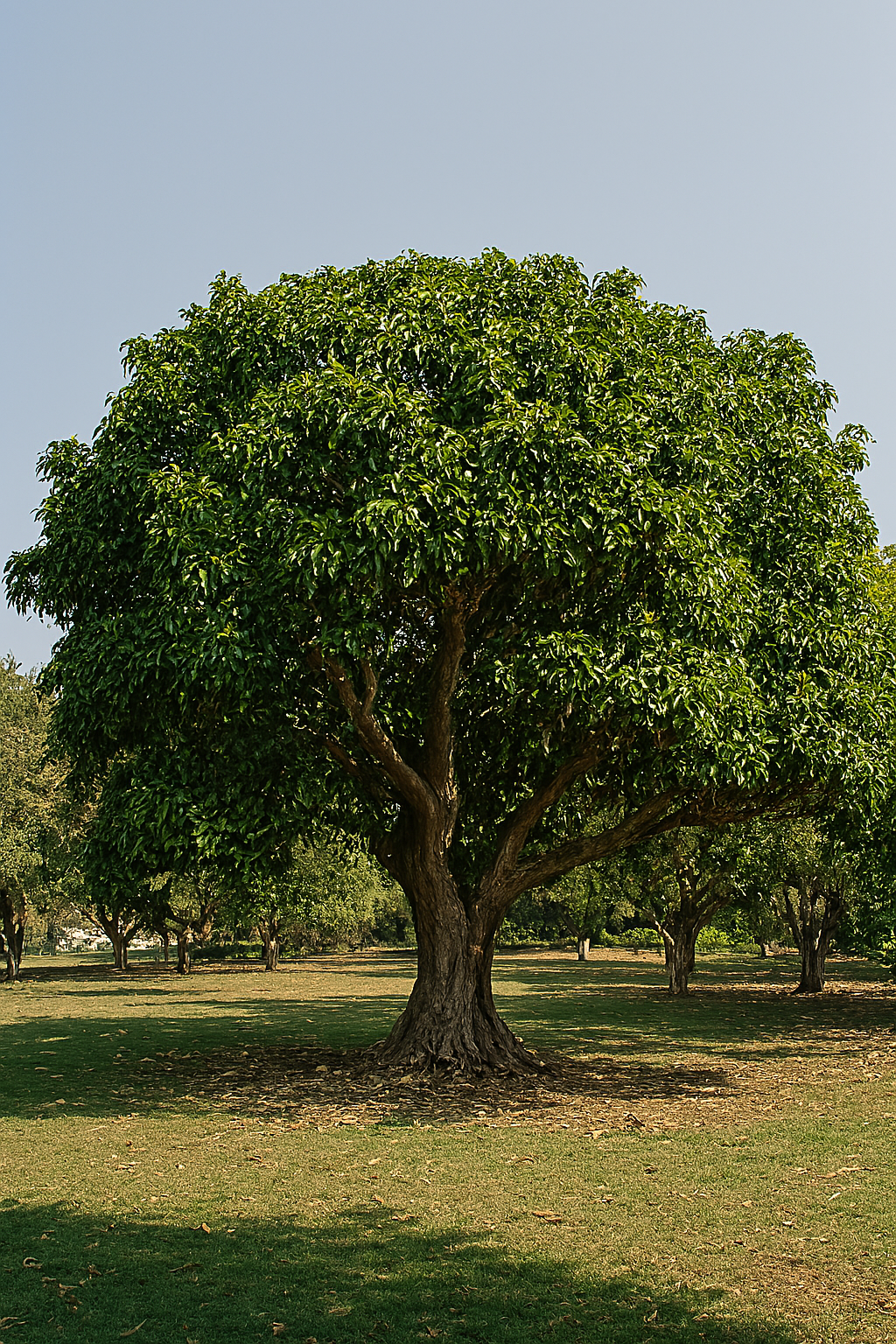
- Size and Habit: A large, deciduous or semi-evergreen tree that can grow up to 25-30 meters in height. It often starts its life as an epiphyte on other trees or structures, similar to a banyan.
- Bark: The bark is a distinctive light grey to white, smooth in young trees, and becomes slightly rough with age. This light-colored bark is the reason for one of its common names, “White Fig.”
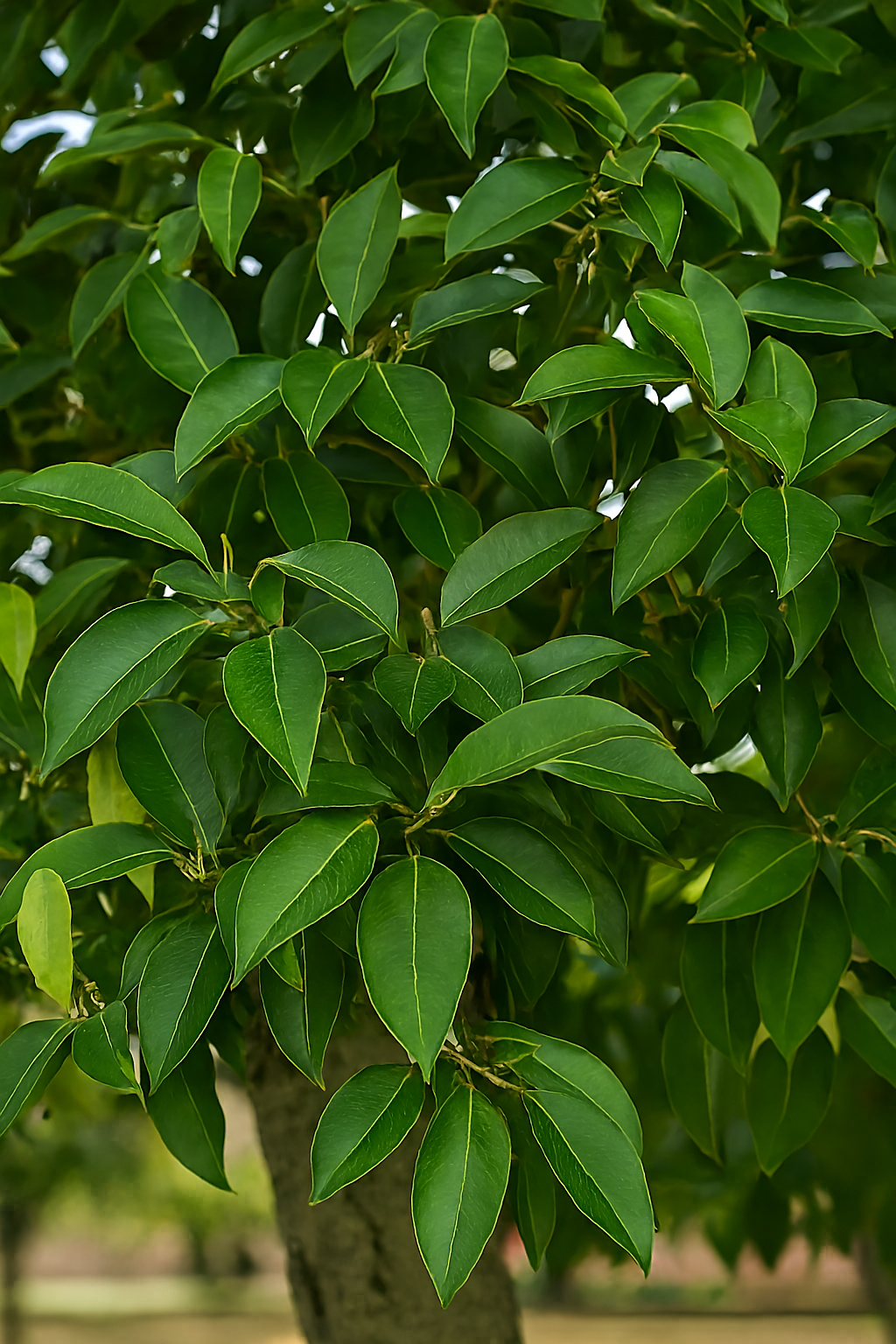
- Leaves: The leaves are simple, ovate to lance-shaped (5-15 cm long), with a glossy green upper surface and a paler underside. A key identifier is the long, pinkish-red petiole (leaf stalk) that can be up to 10 cm long. The leaves are shed for a brief period, usually in the dry season.
- Roots: It develops a strong, buttressed trunk and can produce aerial roots that, upon reaching the ground, thicken into pillar-like supports, forming a structure reminiscent of a banyan tree.
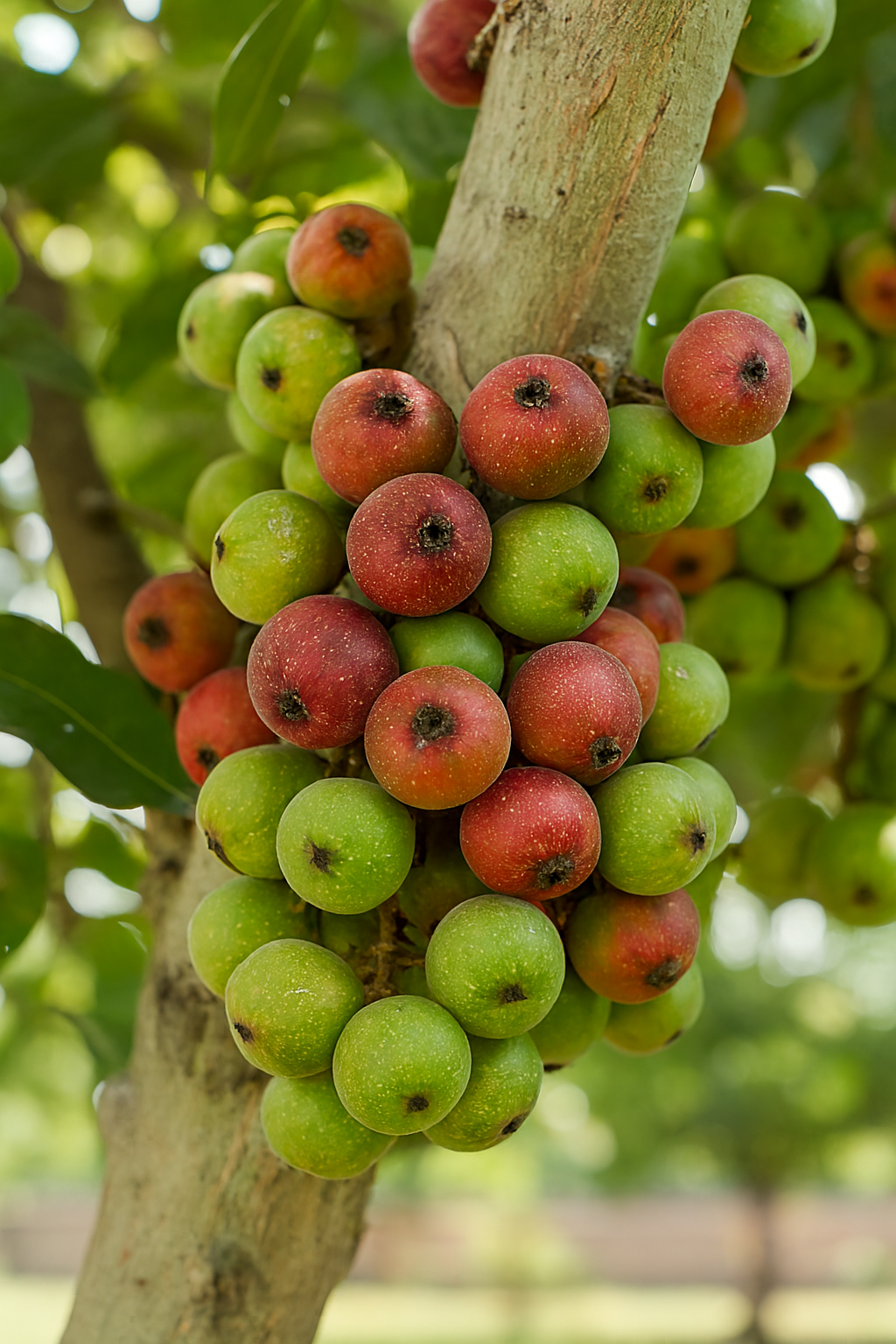
- Fruit (Figs): The figs are small (about 1-1.5 cm in diameter), spherical, and grow in pairs in the leaf axils. They change color as they ripen:
- Unripe: Green with white spots (hence “Spotted Fig”).
- Ripe: A rich, dark red or purple.
- Important: The figs are not true fruits but a specialized structure called a syconium, which contains the flowers inside.
2. Ecology and the Fig-Wasp Mutualism
The Pilkhan is a keystone species, meaning its presence is critical for the survival of numerous other species in its habitat.
- The Invisible Partnership: Like all figs, each Ficus species has a unique, obligate pollination relationship with a specific species of tiny fig wasp (for Ficus virens, it’s mainly Pleistodontes greenwoodi). The female wasp enters the sealed syconium to lay her eggs, simultaneously pollinating the internal flowers. The wasp larvae develop inside, and the cycle continues. This mutualism is a classic example of co-evolution.
- A Food Bank for Wildlife: The Pilkhan produces a massive quantity of figs, often several times a year. When many other trees are not fruiting, Pilkhan becomes a critical food source.
- Birds: Hornbills, parakeets, barbets, mynas, and bulbuls feast on the ripe figs.
- Mammals: Bats, monkeys, langurs, and civets are common visitors.
- Insects: Butterflies and ants are attracted to the sugary sap and fruits.
By feeding on the figs, these animals disperse the seeds far and wide, often depositing them in the canopies of other trees, where the Pilkhan may begin its life as an epiphyte.
3. Traditional and Modern Uses
The Pilkhan tree has been an integral part of human life for centuries.
- Shade and Avenue Tree: Its wide, spreading canopy makes it an excellent shade tree for parks, large gardens, and along roadsides.
- Timber: The wood is light to moderately heavy, strong, and fairly durable. It is used for making:
- Furniture and cabinets
- Packing cases and boxes
- Planks and low-grade construction
- Well curbs and agricultural implements
- Medicinal Uses (Ayurveda and Folk Medicine):
- The bark is used for its astringent and antipyretic (fever-reducing) properties.
- It is traditionally used to treat conditions like diarrhea, dysentery, and ulcers.
- A paste made from the bark is applied to wounds and skin ailments.
- Disclaimer: Always consult a qualified medical practitioner before using any plant for medicinal purposes.
- Other Uses: The latex (sap) has been used as a crude rubber source, and the aerial roots are sometimes used to make rough ropes.
4. Cultural and Religious Significance
While not as prominent as the Peepal or Banyan in Hindu mythology, the Pilkhan holds its own place.
- In some regions, it is considered sacred and is associated with ancestral spirits.
- Large, ancient Pilkhan trees are often found near temples and village centers, serving as a communal gathering spot for social and religious functions.
- Its sheer size and age command respect and are often seen as a symbol of resilience and longevity.
5. Growing a Pilkhan Tree
- Propagation: Easily grown from seeds (sown from ripe figs) or from cuttings.
- Location: Choose the location with extreme care! Due to its potential to grow into a massive tree with a vast root system and heavy canopy, it should never be planted close to buildings, walls, or underground pipes. It requires a large, open space.
- Soil: It is adaptable to a wide range of soil types but prefers well-drained loamy soil.
- Watering: Requires regular watering when young but becomes drought-tolerant once established.
- Caution: Its vigorous roots can be invasive, so it is not suitable for small urban gardens.
Summary Table: At a Glance
| Feature | Description |
| Scientific Name | Ficus virens |
| Common Names | Pilkhan, White Fig, Spotted Fig |
| Native Range | India, Southeast Asia, Australia |
| Typical Height | 25-30 meters (can be massive) |
| Leaf | Glossy green, long pinkish-red stalk |
| Bark | Light grey to white, smooth |
| Fruit | Small syconium, green with spots, ripening to red/purple |
| Ecological Role | Keystone species, vital food source for birds and mammals |
| Key Relationship | Pollinated exclusively by a specific fig wasp |
| Uses | Shade, timber, traditional medicine |
| Cultural Status | Considered sacred in some regions; a community tree |
The Pilkhan tree is more than just a plant; it is a vibrant, living ecosystem. It provides food, shelter, and medicine, all while standing as a majestic, enduring symbol of the intricate connections within nature.
Copyright 2025 Pilkhan.com
 Pilkhan Tree: Ficus virens